













Here's Exactly Refrigerant Cool Your Home Down (ACs & Heatpumps)
The Refrigeration Cycle at a Glance
At its core, the refrigeration cycle is a heat‑moving machine. Instead of creating cold, it moves heat from a cooler space inside your home to a warmer place outside. In heating mode with a heat pump, it runs in reverse, bringing outdoor heat indoors. This simple idea enables the comfort, humidity control, and efficiency we count on every day.
You will find the refrigeration cycle in central air conditioners, ductless systems, heat pumps, chillers, and refrigerators. It matters because the way heat is moved determines how evenly your home cools or heats, how much energy you use, and how reliably your system runs from season to season.
If you have noticed rooms that never quite reach setpoint, sticky indoor air on muggy days, or a system that cycles on and off too often, the answer often lives inside this cycle.
Meet the Key Components
Evaporator Coil – Where Heat Is Absorbed
The evaporator sits inside and handles heat pickup. Low‑pressure refrigerant enters as a cold mixture, evaporates inside the coil, and absorbs indoor heat in the process. A blower moves air across the coil so the refrigerant can soak up that heat and lower your supply‑air temperature.
Compressor – The Workhorse That Lifts Pressure and Temperature
The compressor raises the refrigerant’s pressure and temperature so it can reject heat outdoors. This is where most of the system’s electrical energy is spent. Modern variable‑speed compressors adjust output to match your load, which improves comfort, efficiency, and noise levels.
Condenser Coil – Where Heat Leaves the System
Outside, the condenser rejects the collected heat to outdoor air. As hot, high‑pressure vapor travels through the coil, a fan moves air across the fins so the refrigerant can cool, condense to a liquid, and release heat to the outdoors.
Expansion Device – The Flow Meter That Sets the Stage
A thermostatic expansion valve (TXV) or an electronic expansion valve (EEV) drops the refrigerant’s pressure and meters how much liquid enters the evaporator. This pressure drop chills the refrigerant mixture so it is ready to absorb heat again. An accurately set expansion device is essential for stable operation and efficiency.
Refrigerant, Coils, Fans, Controls, and Piping
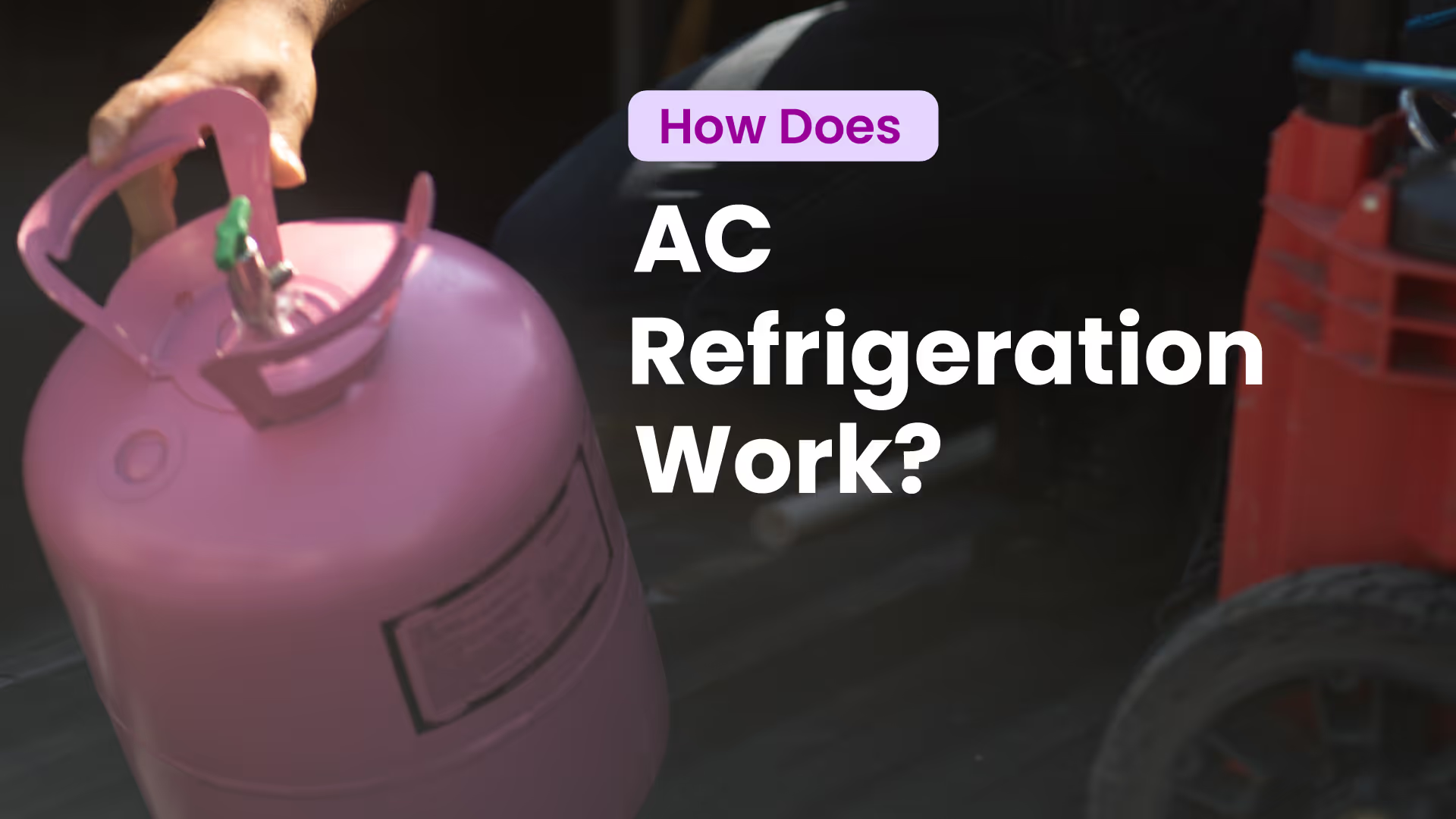
- Refrigerant carries heat and changes phase between liquid and vapor to move large amounts of energy efficiently.
- Coils and fins provide the surface area needed for heat exchange.
- Fans and blowers move air across those coils to transfer heat.
- Controls coordinate temperatures, pressures, and motor speeds so the cycle stays balanced.
- Copper or aluminum piping connects everything and must stay clean, dry, and leak‑free for consistent performance.
How the Cycle Works Step by Step
Here is the cooling sequence you experience every time your system runs:
Low‑pressure vapor leaves the evaporator. After absorbing indoor heat, refrigerant exits the evaporator as a slightly superheated, low‑pressure vapor.
Compression to a high‑pressure, high‑temperature vapor. The compressor squeezes that vapor to a much higher pressure, which increases its temperature so it can reject heat even on hot days.
Heat rejection and condensation to a high‑pressure liquid. In the condenser, outdoor air removes heat from the refrigerant. As enough heat is shed, the vapor condenses into a high‑pressure liquid while continuing to cool slightly.
Throttling to a low‑pressure mix. The TXV or EEV throttles the liquid, dropping its pressure and temperature. The result is a cold, low‑pressure liquid‑vapor mix ready to enter the evaporator.
Evaporation and heat absorption. Indoors, that mix boils inside the evaporator, absorbing heat from your air. The refrigerant leaves as a low‑pressure vapor and the cycle repeats.
Core Concepts That Make It All Click
Phase Change and Latent Heat
Boiling and condensing move far more heat than sensible temperature changes alone. By using phase change, the cycle moves large amounts of energy with relatively little refrigerant mass flow.
Superheat and Subcooling
Superheat is how much warmer the refrigerant vapor is above its saturation temperature at the evaporator outlet. Subcooling is how much cooler the refrigerant liquid is below its saturation temperature at the condenser outlet. Correct superheat and subcooling indicate proper charge, airflow, and metering. They are key diagnostics during maintenance visits.
The Pressure–Temperature Relationship
For a given refrigerant, saturation temperature is tied to pressure. Control the pressure, and you set the temperature at which boiling or condensing occurs. That is how your system adapts to changing outdoor and indoor conditions while keeping you comfortable.
Why This Technology Shines – Benefits and Comparisons
High efficiency and strong COP. Because phase change is so effective, refrigeration systems deliver high coefficients of performance (COP), meaning plenty of heating or cooling for each unit of energy used.
Precise temperature and humidity control. Evaporator coils remove both heat and moisture, which keeps homes comfortable in humid regions where evaporative coolers struggle.
Reliable performance across climates. From dry heat to muggy summers, a well‑sized and well‑maintained system keeps setpoints steady and air dry enough to feel comfortable.
Scalability and flexibility. Options include ducted and ductless setups, multi‑zone systems, and variable refrigerant flow (VRF) designs. Heat pumps add reversibility for efficient heating as well.
Mature service ecosystem and parts availability. This technology has decades of refinement, which means dependable components and well‑understood maintenance.
How it compares to alternatives:
- Evaporative cooling – Low cost and simple, but best in hot, dry climates and offers limited humidity control.
- Absorption systems – Useful where waste heat is available, but more complex and less common in homes.
- Thermoelectric modules – Compact and solid‑state, but low capacity and efficiency for whole‑home comfort.
Overall, vapor‑compression refrigeration is the best all‑around solution for comfort, control, and energy performance in most homes.
Practical Takeaways for Homeowners
Choosing the Right System for Your Home
Match capacity to your home’s load and climate. Look at efficiency ratings like SEER and EER for cooling, COP and HSPF for heat pumps. A professional load calculation helps avoid short cycling or underperforming equipment.
If you live in a humid area, consider systems with longer, lower‑speed runtimes that wring out moisture more effectively. Zoning or multi‑zone options can help if different parts of your home have very different loads.
Refrigerant Considerations
The industry is transitioning to lower global warming potential (low‑GWP) refrigerants. If you are replacing or upgrading equipment, ask about refrigerant type, serviceability, and local code implications. Proper installation practices are critical to keep moisture and contaminants out of the system.
Maintenance That Preserves Efficiency
Clean coils and correct airflow keep heat exchange efficient. A clogged filter or dirty blower reduces airflow, which can cause icing, longer runtimes, and higher bills.
Correct refrigerant charge matters. Too much or too little charge hurts efficiency and reliability. Routine checks of superheat and subcooling help verify charge, airflow, and metering are all on track.
Leak checks protect the environment and your wallet. Finding and fixing small leaks early prevents bigger repairs and performance losses.
Smart Upgrades That Move the Needle
Variable‑speed compressors and indoor blowers smooth out temperatures, reduce humidity, and lower energy use. Electronic expansion valves (EEVs) fine‑tune refrigerant flow across changing loads. Thoughtful control strategies that prioritize longer, steadier runtimes can improve comfort and indoor air quality.
Common Issue Clues and What They May Mean
If you have been seeing any of these, the refrigeration cycle likely needs attention:
- Icing on the indoor coil – Commonly linked to low airflow, a very dirty filter, or low refrigerant charge.
- Short cycling – Often caused by oversizing, airflow problems, control settings, or safety trips.
- High head pressure – Can stem from a dirty outdoor coil, airflow blockage, overcharge, or very high outdoor temperatures.
- Warm air or uneven temperatures – May indicate refrigerant flow issues, a failing compressor, or duct and zoning problems.
How Peak Heating and Cooling Can Help
Whether you are selecting a new system, planning an upgrade, or looking to restore lost efficiency, our team can help you align equipment, controls, and maintenance with your home’s needs. If you suspect issues like icing, short cycling, or high head pressure, a timely diagnostic visit can protect your comfort and prevent larger repairs.
Curious about what the refrigeration cycle is telling us about your system’s health? Reach out to schedule a checkup or to discuss options tailored to your home and climate.
